
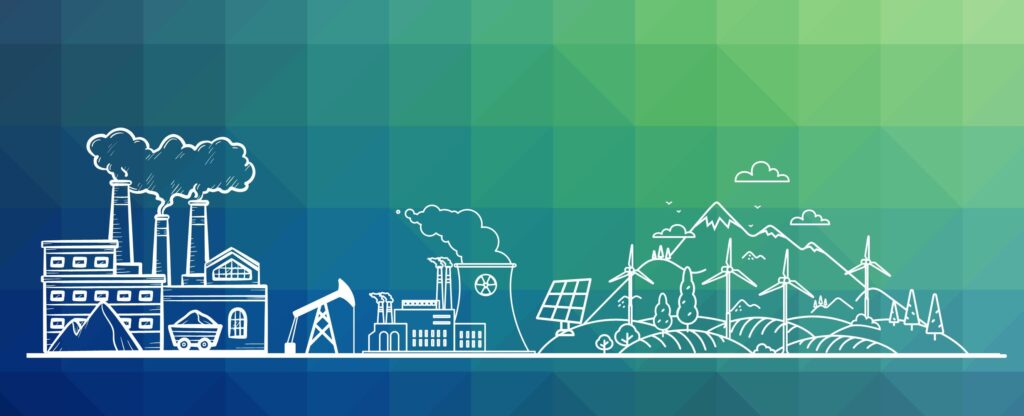
Reconciling Decarbonisation, System Expansion and Universal Access
The global energy debate is often framed as a stark choice: fossil fuels belong to the past, while renewables represent the future. It is a compelling narrative, but it does not reflect how energy systems actually work. A modern energy system is a web of primary-energy supplies, conversion plants, pipelines and transport networks, electricity grids, storage assets, markets, control systems and end-use technologies. What matters is not simply how many megawatts of a particular technology have been installed. The real test is whether the system can deliver energy that is adequate, affordable, reliable and progressively cleaner – every hour of the year.
That is why it helps to separate three closely connected but not interchangeable ideas. The energy transition is the shift in the technologies, fuels and emissions profile of an energy system. Energy progression is the gradual improvement in the quantity, quality and productive use of energy as an economy develops. Energy poverty is what people experience when those systems fail to provide energy that is available, affordable, reliable, safe and clean. We need to consider all three together. A transition that blocks development will not retain political support, while energy progression built around inefficient, high-carbon infrastructure risks locking countries into costly assets that may become obsolete before the end of their useful lives.
1. Energy transition: A System Transformation, not a Fuel Substitution
An energy transition is much more than replacing one fuel with another. It reshapes the entire energy value chain: the primary-energy mix, the technologies used to produce electricity and heat, the networks that move energy, how consumers use it, and the efficiency with which final energy becomes useful energy. Climate commitments are an important driver, but not the only one. Falling technology costs, poor air quality, energy-security concerns, electrification and digitalisation are all pushing the system in the same direction.
At its core, the technical goal is deep decarbonisation: reducing greenhouse-gas emissions for every unit of useful energy delivered without compromising security of supply or economic competitiveness. Achieving that goal requires several changes to occur simultaneously:
- Expanding low-emission electricity generation from solar PV, wind, hydropower, geothermal, sustainable bioenergy, nuclear power and other suitable sources;
- Electrifying end uses where it is technically and economically sensible, including light-duty transport, buildings, low- and medium-temperature industrial heat, and, increasingly, cooking;
- Improving efficiency across both energy supply and end use so economies can produce more value from each unit of energy consumed;
- Developing low-carbon fuels and feedstocks – including hydrogen and its derivatives, sustainable liquid fuels, and biomethane – for activities that are difficult to electrify directly;
- Using storage, demand flexibility, stronger interconnections and digital system operation to integrate variable renewable power; and
- Tackling residual emissions through methane abatement, improved industrial processes, and, where the economics justify it, carbon capture, utilisation and storage.
The pace of change is already significant. In 2024, renewable energy and nuclear power supplied more than 80% of the increase in global electricity generation, and the world added roughly 700 GW of renewable capacity. Solar PV accounted for almost four-fifths of that new capacity. Even so, fossil fuels still generated close to 60% of the world’s electricity, with coal alone contributing about 35%. Both facts are important. Clean energy is growing rapidly, but it is being added to a global system where electricity demand is also expanding. In many markets, new renewable generation is still supplementing fossil generation before it begins to replace it at scale.
2. Capacity is not the same as energy, and energy is not the same as adequacy
Installed capacity is one of the most commonly cited figures in energy discussions, but on its own it can be misleading. One megawatt of solar PV does not produce the same annual output or provide the same system services as one megawatt of hydropower, geothermal, nuclear or gas-fired generation. Capacity factor partly explains the difference: it compares actual annual output with the output a plant would produce if it ran continuously at full capacity. Capacity credit asks a different but equally important question: how much dependable power will that resource contribute when the system is under the greatest stress?
Wind and solar have very low marginal operating costs, but their output varies with weather and time of day. At low or moderate penetration, an existing power system can often absorb that variability. As their share rises, however, the system requires more transmission capacity, storage, flexible generation, accurate forecasting, demand response, ancillary services and cross-border interconnection. Where conventional synchronous plants are displaced, grid-forming inverters, synchronous condensers or similar technologies may also be needed to maintain voltage control, fault current, frequency response and overall system strength.
This is also why the levelised cost of electricity, useful as it is, cannot tell the whole story. It compares the lifetime unit cost of individual technologies, but it does not fully capture when and where electricity is produced or how it contributes to reliability. Planners must also consider integration costs, congestion, curtailment, reserve requirements, firm capacity, and the cost of keeping the system secure during credible failures. The practical question is not simply ‘Which plant produces the cheapest kilowatt-hour?’ It is ‘Which combination of resources gives us the most secure system at the lowest overall cost?’
3. Energy progression: building the energy ladder of development
Energy progression involves moving from low-density, inefficient and often polluting forms of energy towards services that are cleaner, more controllable and more productive. The idea is particularly relevant to low- and middle-income countries. Many of these countries are not replacing a mature energy system; they are still building one, even as their populations, cities and energy demand continue to grow.
The progression looks different at each level of the economy. A household may move from a traditional three-stone fire to an improved stove, LPG, ethanol, biogas or electric cooking. A community may progress from kerosene lamps to solar home systems, then to a mini-grid or a reliable national network. At the national level, progression means building firm generation, high-voltage transmission, distribution systems, fuel logistics and storage – as well as the institutions and technical skills needed to operate them.
None of this means developing countries should repeat the carbon-intensive path taken by today’s industrialised economies. Where a newer technology is proven and affordable, leapfrogging makes sense. Distributed solar can bring power to communities that might otherwise wait years for grid extension. Efficient motors can reduce industrial electricity demand. Digital meters can reduce commercial losses, while electric mobility can reduce dependence on imported petroleum when the power system is reliable and sufficiently low-carbon. Still, leapfrogging is not magic. It does not remove the need for backbone infrastructure, careful system planning, maintenance capability and long-term finance.
4. Energy poverty as a multidimensional service deficit
Energy poverty is often reduced to a simple question: is a household connected to electricity? In practice, access is more complex. A connected customer may endure frequent outages, low voltage, unaffordable tariffs, or a connection too small to support useful equipment. A family may have electric lighting yet still cook with charcoal every day. A factory may be on the grid yet depend on an expensive diesel generator because critical loads cannot be trusted to an unreliable supply.
A serious assessment of energy poverty must therefore look at at least six dimensions:
| Dimension | Technical Interpretation |
| Availability | Can the user actually obtain the energy carrier or service where it is needed? |
| Affordability | Can a household or business meet the connection, equipment and consumption costs without unacceptable financial strain? |
| Reliability | Is the supply available when needed, and are outages infrequent and restored within a reasonable time? |
| Adequacy | Are the power level, energy quantity and connection capacity sufficient for the services the user needs? |
| Quality and safety | Do voltage, frequency, combustion, indoor air quality and equipment performance meet acceptable standards? |
| Sustainability | Can the service be maintained financially, institutionally and environmentally over time? |
The global numbers show how large the challenge remains. In 2023, about 666 million people still lacked basic electricity access, including approximately 565 million in sub-Saharan Africa. Another 2.1 billion people continued to cook with polluting fuels and technologies. Even these figures understate the problem because they do not fully count people whose connection exists on paper but delivers an inadequate service. Seen properly, energy poverty is not just an infrastructure gap. It is also an affordability problem, a public-health burden, a source of gender inequality and a constraint on economic productivity.
5. Africa’s structural energy paradox
Africa’s energy position is full of contradictions. The continent has exceptional solar resources, major river basins, geothermal potential, strong wind corridors, natural-gas reserves and many of the minerals needed for clean-energy technologies. Yet it remains at the centre of the global energy-access deficit. The problem is not a lack of physical resources. It is the difficulty of turning that potential into energy projects that are affordable, financeable and dependable to operate.
The reasons are structural and familiar to anyone who has developed projects on the continent: financially weak utilities, congested transmission networks, high technical and commercial losses, and the mismatch that arises when debt must be repaid in hard currency while customers pay in local currency. Add high sovereign-risk premiums, shallow domestic capital markets, regulatory uncertainty and limited project-development capacity, and promising projects quickly become expensive. Renewable projects are particularly sensitive to this problem because most of their costs are paid upfront. The same solar plant can produce low-cost power when financed cheaply and very expensive power when the cost of capital is high.
The financing requirement is significant, but it is not beyond the reach of the global system. The IEA estimates that Africa needs roughly USD 22 billion a year to connect homes and businesses to electricity, plus another USD 4 billion annually for clean cooking. Together, these costs are less than 1% of annual global energy investment. The deeper issue is therefore where capital flows, how risk is priced, and whether financing can reach the countries, projects and consumers with the greatest unmet need.
6. The role of oil and gas in a progressing energy system
Oil and gas should be assessed by the functions they perform, not by slogans. Oil remains difficult to replace quickly in aviation, marine transport, heavy-duty mobility, petrochemical feedstocks and several industrial uses. Natural gas can provide industrial heat, fertiliser feedstock and flexible electricity. In a power system with a growing share of variable renewables, fast-ramping gas generation may help with balancing and adequacy, although storage, interconnection and demand response can reduce that role over time.
For resource-rich developing countries, hydrocarbons can generate export income, tax revenue, infrastructure and inputs for domestic industry. But the risks are equally real: volatile prices, weak governance, methane leakage, environmental damage, cost overruns and long-lived assets that may lose value as global demand and policy change. Resource development is not automatically development; the outcome depends on project economics and the quality of governance.
A credible petroleum project therefore needs more than recoverable reserves. It should also pass rigorous economic and transition-risk tests:
- Will demand remain resilient across global energy and carbon-price scenarios?
- Do the break-even price, fiscal returns and debt-service obligations remain manageable in a prolonged downside scenario?
- Is the project consistent with national emissions commitments and with credible methane-management standards?
- How much domestic value, local capability and shared infrastructure will it generate?
- Does it offer greater development value than alternative uses of the same capital?
- Is there a transparent way to convert temporary resource revenues into productive assets that will outlast the resource’s lifespan?
Natural gas, in particular, should not be automatically labelled either a ‘transition fuel’ or an unacceptable fuel. Its emissions impact depends on what it replaces, how much methane escapes upstream, the efficiency and utilisation of the plant, the lifetime of the infrastructure, and the availability of cleaner alternatives. That same functional, lifecycle approach should be applied consistently to every energy technology.
7. Uganda’s opportunity: combine resource development with system modernisation
Uganda need not choose between petroleum development and renewable energy. A better objective is to use the country’s diverse resource base to build an energy system that is affordable, resilient and steadily less carbon-intensive. Hydropower will remain important, while solar will play a growing role in utility-scale generation, commercial and industrial supply, and off-grid access. Geothermal exploration, sustainable biomass, biogas, storage and regional power trading can add resilience. Petroleum can support transport-fuel security, industrial value chains, public revenue and infrastructure – but only if governance and environmental performance remain rigorous.
The country must also close the gap between electricity generated and energy used productively. It is possible to have apparent surplus generation alongside transmission constraints, distribution losses, costly connections, and industries that cannot obtain the quality of supply they need. Solving that mismatch calls for coordinated planning. New generation should be developed alongside transmission and distribution, industrial parks, irrigation, agro-processing, electric mobility, clean cooking, and regional electricity trade.
Clean cooking deserves the same policy attention as electricity generation. Uganda is unlikely to succeed with a one-fuel solution. Electric cooking can work where the grid is strong and tariffs are competitive. LPG and ethanol require reliable distribution networks. Biogas makes sense in suitable agricultural settings, while substantially improved biomass technologies may be a necessary interim option for households that still cannot afford modern fuels. In each case, the appliance, consumer finance, fuel logistics, safety standards and behaviour-change programme matter as much as the fuel itself.
8. The just-transition requirement
A just transition cannot be achieved by adding a social paragraph to the end of a decarbonisation plan. Questions of fairness must shape technology choices, electricity tariffs, land acquisition, labour policy, public revenue and local participation from the outset. The concern is not limited to workers and communities dependent on carbon-intensive industries. It also includes the millions of people who have never received adequate service from the existing energy system.
In practical terms, a credible just-transition framework should provide for:
- A distributional analysis that clearly shows who pays the capital, tariff and tax costs and who receives the benefits;
- Lifeline tariffs or targeted support that protects vulnerable consumers without making utilities financially unsustainable;
- Worker-transition plans based on real skills mapping, credible retraining pathways, and economic diversification in affected regions;
- Fair benefit-sharing, robust environmental safeguards and enforceable restoration obligations for host communities;
- Local industrial strategies that build domestic engineering, operations, maintenance and manufacturing capabilities; and
- Transparent reporting on access, reliability, affordability, emissions and employment outcomes.
The transition will lose public support if electricity becomes cleaner but less affordable. It will also lose credibility if mining the minerals required for clean technologies repeats the environmental and labour failures of earlier extractive industries. Decarbonisation and inclusion must be designed together, not treated as competing goals.
9. A technically balanced policy architecture
Every national energy strategy must balance three pressures: security, affordability and environmental sustainability. There is no credible shortcut. Governments need integrated resource plans that test demand, generation, fuel supply, network expansion, flexibility and climate resilience across several plausible futures, rather than betting everything on a single forecast.
Seven priorities stand out:
- Plan the whole system. Generation, networks, fuels, storage and consumer demand must be assessed together, using clear reliability and adequacy standards.
- Choose the least-cost route to access. Grid extension, mini-grids and stand-alone systems each have a place; the right choice depends on settlement patterns, likely demand and the full lifecycle cost.
- Reduce risk without hiding it. Good regulation, guarantees, blended finance and local-currency funding can reduce unnecessary financing premiums, but they should never be used to mask weak project economics.
- Treat efficiency as an energy resource. Efficient motors and appliances, better buildings, and lower network losses can free up capacity at a lower cost than building new generation capacity.
- Pay for flexibility. Storage, demand response, ancillary services and firm capacity require clear procurement and revenue mechanisms if investors are expected to provide them.
- Connect energy investment to productive demand. Power systems become more sustainable when energy enables industry, agriculture, digital services, transport and urban development – activities that generate income and strengthen utility revenues.
- Measure outcomes rather than announcements. Track whether people receive reliable service, what it costs, how cooking is actually used, how much energy supports productive activity, whether emissions intensity is falling, and how many durable local jobs are created.
Conclusion: progression with decarbonisation and justice
Energy transition, energy progression and energy poverty are not three separate debates. They are three ways of looking at the same energy-system challenge. Transition changes the technologies and emissions profile. Progression expands the quantity, quality and productive use of energy. Poverty shows us where the system still fails the people it is meant to serve.
The real measure of success is therefore not renewable capacity alone, nor is it how quickly one fuel disappears from the national energy balance. It is whether the system can deliver reliable, affordable, useful energy, support industrial development, reduce health burdens, withstand technical and geopolitical shocks, attract finance at a sustainable cost, and lower its environmental impact over time.
The writer is James Mugerwa, a lecturer at the Institute of Petroleum Studies – Kampala.