

An oil and gas perspective on how a risk premium born in the Gulf travels down the barrel, through freight and financing, and ends up in a Ugandan household budget.
A shooting war in the Gulf can feel like someone else’s problem when you are sitting in Kampala, Gulu or Mbarara. In my experience, it rarely stays someone else’s problem for long. The link shows up quickly, and in ordinary places: the fare a boda rider quotes you, what a trader charges to run a pickup of produce into town, the diesel a shop burns to keep its generator alive through a load-shedding evening, the price of a basket of food on a Saturday.
Oil is not just another line on a commodities screen. It underpins almost everything that moves, from transport and farming to manufacturing, construction, aviation, and trade. And here is the part people outside the industry often miss: the market does not wait for a barrel to go missing. The moment traders start pricing in the fear that production or shipping might be hit, the shock is already travelling. No Ugandan station has to run dry for you to feel it.
So, the question is never simply “did crude go up?” Anyone can read that from a headline. What actually decides Uganda’s fate is the whole price path: how steep the initial jump is, how long prices stay elevated, what refined products do (a different story from crude), where freight and war-risk insurance settle, and, crucially, where the shilling goes against the dollar. Get those variables right, and you can tell, weeks ahead, whether a Middle East flare-up stays a headline abroad or turns into a cost-of-living problem at home.
Oil Markets Price Fear Long Before They Price Shortage
This is the single most important thing to understand, and it is the one that most confuses public debate. Oil markets trade the future, not the present. Traders, refiners, shipowners and finance ministries do not sit and wait for a confirmed loss of supply; they price the odds of one. In plain terms: crude can get dramatically more expensive even while every well is still pumping and every tanker is still sailing. The barrels are all there. What has changed is the probability attached to them.
Iran matters on two counts: it is a serious producer in its own right, and it sits astride the most sensitive real estate in the oil world. But the market never looks at Iranian barrels in isolation. It looks at the whole neighbourhood Saudi and Gulf output, the big export terminals, the pipelines, the offshore platforms, the tanker lanes, and, above all, the Strait of Hormuz, through which roughly a fifth of the world’s seaborne crude must pass. Roughly a fifth of the world’s seaborne oil passes through a channel narrow enough that a handful of mines or missiles could close it. Put a credible threat anywhere near those assets, and the market bolts a geopolitical risk premium onto every barrel, everywhere.
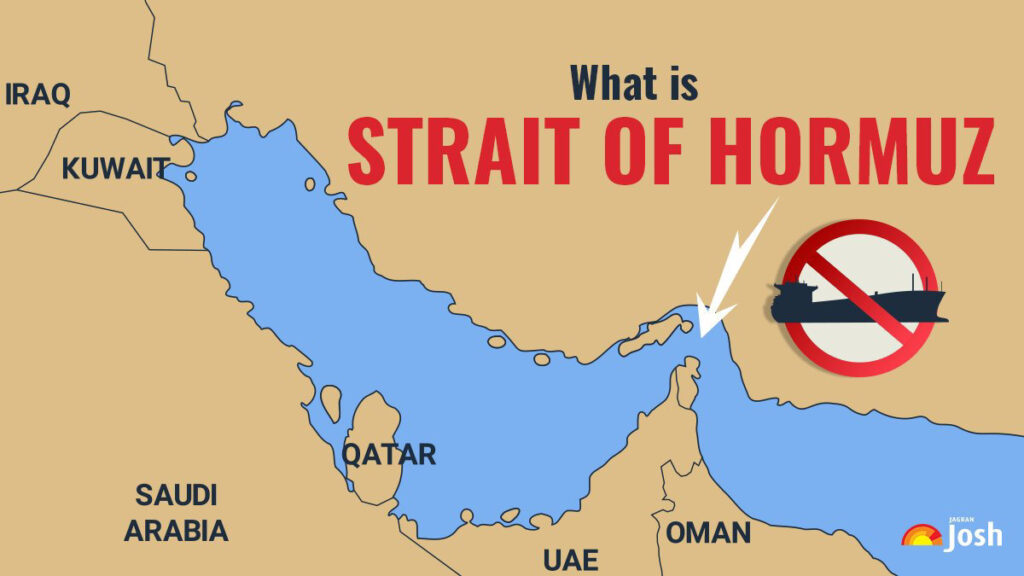
The Strait of Hormuz
And that premium is not an abstraction; you can see it on the invoices. Shipowners demand higher rates to sail into a war zone. Underwriters jack up war-risk cover, sometimes overnight, sometimes to the point that a single voyage’s insurance costs serious money. Refiners scramble and overbid for cargoes from safer origins. Banks quietly tighten the financing they extend against oil in transit. The barrel itself may be perfectly available; it is the cost of getting it to you in one piece that climbs.
This is why a market in crisis looks so jumpy to outsiders. It spikes on an attack, sags the moment someone important says something conciliatory, then jumps again when a tanker is seized or a terminal is threatened. It is not irrational, nor is it a straight line up. It is thousands of participants repricing the same risk, minute by minute, as the news turns.
Read the Price Like a Trader, Not Like a Headline
I find it helpful to think of a wartime oil move in three acts. First, the shock: within hours, the market prices in the worst credible outcome, because no trader wants to be caught short if Hormuz actually closes. Then the correction: as the days pass, the market checks the facts: is anything actually damaged? Are barrels still loading? Are ships still moving? If the disruption is smaller than feared, the premium bleeds back out. Then the long tail of volatility, where the price twitches with every strike, every sanction, every diplomatic rumour. Most crises spend far more time in act three than anyone expects.
For Uganda, the scary intraday number on the screen is not the one that matters. What matters is the average price that sticks. A one-day spike can be gone before an importer has even gone to market for the next cargo; it never reaches us. A price that stays elevated for three or four weeks is a different animal entirely: it resets the cost of buying, financing, and landing the next parcel of diesel in the region. Persistence, not the peak, is what bites.
There is also a technical point that trips up almost every headline writer. Nobody pours Brent crude into a taxi. We buy products: petrol, diesel, kerosene, jet fuel. Product prices have a life of their own. They move with crude, yes, but also with refinery outages, the amount of product in the tank, the season, regional supply and demand, and refining margins, including the crack spread in the trade. It is entirely normal for diesel to remain stubbornly expensive at the pump while crude is already falling on the screen. The two are related, not joined at the hip.
This is exactly where the public argument goes wrong. Brent drops, and everyone quite reasonably asks why the pump has not followed. The answer is that the fuel in that station’s tank today was bought weeks ago at a different crude price, a different shilling, a different freight rate, under a financing deal struck at the time. A retailer prices off the cost of replacing that fuel, not off this morning’s crude headline. That lag runs both ways, and it is not, whatever anyone tells you, simple profiteering.
Why the Same Shock Hits Uganda Harder
Uganda is building a genuine upstream industry: real reserves, real infrastructure. But do not confuse that with the fuel in your tank. The retail market still runs almost entirely on imported product, and every litre must be bought in dollars, brought in through Mombasa or Dar, stored, hauled up the corridor, financed, taxed and distributed before it ever reaches a pump in Uganda. That is a long chain, and every link has a cost and a vulnerability.
In the trade, we don’t talk about “the oil price” when we mean this; we talk about the landed cost, or import parity. Stack it up: the international product price, ocean freight, insurance, port and terminal charges, storage, the inland haul, the cost of financing it while it sits and moves, taxes, and margins along the way. The pump price is the sum of that whole stack. Squeeze any single link, such as a jump in freight, a war risk surcharge, or a financing squeeze, and the number at the bottom goes up.
Then geography adds a second problem. Uganda does not just import fuel; it has to haul it eight or nine hundred kilometres inland from the coast, and the trucks hauling it run on diesel. So, when diesel gets expensive, Uganda gets hit twice: once on the product it is buying, and again on the fuel burned to move that product to where people need it. The commodity and its own delivery cost rise together. That is a nasty piece of compounding.
That is what I mean by the landlocked premium. Here is the frustrating part: much of it has nothing to do with Brent or any war. Congestion at Mombasa, a slow week at customs, a washed-out stretch of road, tank tops filling up, or a security scare on the corridor. Any of these can widen the gap between the world price and the Ugandan pump price while the global benchmark remains perfectly still.
How a Barrel in the Gulf Becomes Inflation in Uganda
1. First It Shows Up at the Pump
The most visible effect is the direct one. When product prices remain high and the cost of replacing stock stays high, petrol and diesel have to move. It is rarely instant. Marketers are often still working through fuel they bought at a lower price, but once that older stock runs out and the tank has to be refilled at the new price, the new cost works its way straight into wholesale and then retail. The buffer only lasts as long as the cheap inventory does.
A household meets it in the obvious places: the car, the taxi, the bus, the boda, and the generator that keeps the lights on when the grid fails. A business meets it in deliveries, in site plant, in tractors, and in the backup generator that is anything but backup in practice. Fuel is not a one-off purchase; it is a cost you pay every week. So even a small rise, if it sticks around, quietly eats a real hole in the cash flow.
2. Then Transport Carries It Everywhere Else
Transport is the conveyor belt that carries an oil shock into the price of things that have nothing to do with oil. The truck carrying cement, the pick-up collecting milk, the bus carrying workers, and the motorbike delivering a parcel all burn fuel. Faced with higher costs, an operator does one of a few things: raises fares, cuts the number of trips, overloads to spread the cost, or skips the maintenance he should be doing. Every one of those choices has a price tag, and someone downstream pays it.
That is how a fuel shock reaches people who do not even own a bicycle. The shopkeeper pays more to restock. The school pays more to transport pupils and run its generator. The hospital pays more for ambulances and supplies. The factory pays more to bring in raw materials and send out product. By the time all of that has washed through, the extra fuel cost is baked into the price of ordinary goods and services, invisible yet everywhere.
3. Food Can Get Dearer Even in a Bumper Year
Food is where this hurts most, because a Ugandan household spends a large share of its income on food. And the price of food is not set at the farm gate. Between the garden and the plate, produce has to be gathered, sorted, stored, kept cool where necessary, hauled to market and sold, and every one of those steps runs on energy and logistics. Fuel is stitched through the whole journey.
The farmer pays more to plough, pump water, and move the crop. The aggregator pays more to collect it. The trader hauling matooke, vegetables, milk, fish, or meat into town has to recoup not only fuel costs but also the cost of refrigeration and the produce that spoils on a slow road. So, a country can grow more than enough food and still watch prices climb, simply because moving that food has become more expensive. You see it in the small change: the day a single tomato quietly goes from a few coins to five hundred shillings, nothing has gone wrong in the garden; something has gone wrong on the road.
4. Business Eats the Shock First – Until It Can’t
Businesses rarely raise prices the moment costs go up. They know customers hate it, and competition punishes whoever blinks first. So, at first, they swallow it and take the hit on margin. But a margin is a finite cushion. When high fuel costs drag on, something has to give: prices go up, output comes down, hiring is frozen, hours are cut, or the axe falls on some other line of spending. Absorbing the shock only ever buys time.
Small and medium firms are the most exposed of all. They run on thin working capital, live and die by road transport, and rely on generators whenever the grid wobbles. Drag a fuel shock out long enough, and you get the worst of both worlds for them: rising prices and slowing business at the same time, precisely the squeeze that closes small companies.
5. The Exchange Rate Can Double the Blow
Fuel is always bought in dollars. When the import bill rises, importers have to find more dollars to buy the same volume of fuel. That scramble for foreign currency can drag the shilling down, and now you have two shocks stacked on one another: the product costs more dollars, and each of those dollars costs more shillings. The pump feels both at once.
And a weaker shilling does not stop at the fuel station. It quietly raises the shilling price of medicines, fertiliser, machinery, electronics, industrial inputs, and the whole import bill. That is how a disturbance that started in the oil market can spread into broad, general inflation across almost everything the country brings in from abroad.
6. And Then Expectations Take Over
The hardest phase begins in people’s heads. Once everyone simply expects prices to keep rising, they start acting on it in advance. Operators raise fares before their costs actually go up. Suppliers build in a precautionary margin, just in case. Workers push for higher wages to stay ahead. Firms reprice more and more often. Economists call these second-round effects, and they are the dangerous ones, because they can keep inflation running hot long after the original oil shock has faded from the news. Expectations, once loose, are far harder to put back in the bottle than any single price spike.
Why a 10% Jump in Oil Doesn’t Mean 10% More Inflation
Now, the reassuring half of the picture. The passthrough, though real, is neither instant nor one-for-one. A 10% jump in a crude benchmark does not hand you 10% more at the pump, and certainly not 10% across the whole consumer price index. Several factors get in the way, and they are worth knowing so you can spot the scaremongering.
Duration is the first thing: a short spike can be gone before it even reaches a replacement cargo. The shilling can soften the blow or make it worse. Existing stock delays adjustment. Taxes matter more than people think: a large, fixed share of the Ugandan pump price is tax, and because it does not move with crude, it actually mutes the percentage swing you feel at the pump. And competition keeps everyone a little honest; no marketer wants to be the first to pass a cost through, let alone the most expensive.
Demand matters as well. When wallets are already stretched, a business often cannot pass on the full increase, and pushing too hard drives customers away. Instead, it eats some margin, shrinks the pack, and trims costs elsewhere. That is why a fuel shock almost never arrives as one clean jump across the board. It seeps in, gradually and unevenly, showing up in one corner of the basket before another.
Uganda’s Own Oil is a Strategic Prize – Not a Price Shield
Let me be clear, because this is often misunderstood: Uganda’s oil development is genuinely valuable. It can boost export earnings, government revenue, infrastructure and energy security. But pumping crude does not, on its own, make the fuel in your tank cheaper. Crude is not fuel. It has to be refined into products people can actually use, then stored, moved and distributed. Whether any of that reaches the consumer as a lower price depends on refining economics, product yields, how hard the plant is run, financing and regional demand. Owning the barrel is not the same as owning a cheap pump price.
Look at established producers. Many still price fuel at the pump broadly in line with world markets, because that is the opportunity cost of every litre they sell at home rather than export. The real protection was never the crude itself. It is the efficient value chain behind it: dependable refining or supply deals, enough storage to ride out a wobble, competition in distribution, regulation that works, and infrastructure that moves product at the lowest practical cost. That is the thing worth building.
So, Uganda should resist the temptation to treat first oil as a cure for imported inflation. It is a milestone worth celebrating, but the resilience that truly shields households will come from how well the country integrates upstream production with refining, logistics, power, transport and industrial policy. First oil marks the start of that work, not the end of it.
What Uganda Should Actually Do Now
Start with information, because you cannot manage what you are not watching. Government, the regulator and industry need eyes on all of it, including crude and product prices, freight and insurance, the exchange rate, how much fuel is actually in the country, and the margins retailers are running. And they need to talk about it clearly and early. In this business, silence breeds rumour, and rumour breeds panic buying, speculative pricing and bad policy made in a hurry. A calm, well-informed public is itself a form of supply security.
Second, take fuel security stocks seriously. Strategic reserves and healthy commercial inventories buy you time, and in a supply scare, time is everything. They will not protect you forever against a prolonged global price shock; nothing will. But they are exactly what stops a two-week disruption from turning into an overnight queue at the pump crisis. Think of it as insurance you hope never to claim.
Third, treat the corridor as an inflation policy because, for a landlocked country, it is. Faster customs, reliable storage, corridors that flow, and fewer pointless non-tariff barriers each of these shaves the landed cost of fuel. I cannot say this strongly enough: for Uganda, a well-run route from the port is worth as much as the world price itself. You cannot control Brent. You can absolutely control how efficiently a truck gets from Mombasa to Kampala.
Fourth, if you must intervene, aim it. Blanket fuel subsidies are a trap; they are ruinously expensive, hand most of the benefit to those who burn the most fuel (not the poor), and, once in place, are almost impossible to remove without a political fight. If support is needed, direct it where it does the best per shilling: vulnerable households, public transport, food logistics, and essential services. Targeted support is harder to administer, but it is far better value for money.
Fifth, this is the long game. Use less oil to produce each unit of output. Reliable grid power that displaces diesel generators, real mass transport, moving freight by rail and water rather than only by road, urban planning that shortens journeys, more efficient vehicles, and electric mobility introduced at a sensible pace: every one of these lowers the country’s exposure to the next shock, and there will always be a next shock. The cheapest barrel is the one you never had to import.
And this is not only a job for government. Businesses have real levers of their own: plan routes properly, consolidate deliveries instead of running half-empty trucks, maintain the fleet, run an energy audit, wean the site off the generator, and buy fuel smarter. In a volatile market, efficiency stops being a green talking point and becomes something much more practical: a defence of your margins and your people’s jobs.
The Bigger Picture: Every Landlocked Neighbour is in the Same Boat
Uganda is not alone in this. Rwanda, Burundi, South Sudan, Zambia, Malawi. Every landlocked economy on the continent carries the same double burden: it imports the world oil price and, on top of that, the cost of reaching the sea. This means their inflation is determined as much by regional infrastructure, border efficiency and plain old neighbourly cooperation as by anything happening in the Gulf. Geography wrote the problem; only cooperation solves it.
A functioning corridor reduces the landlocked premium; a clogged or broken one amplifies every external shock. So, the pipelines, railways, terminals, roads, customs systems and shared emergency arrangements that link these countries to the coast should be seen for what they are: regional energy security infrastructure, every bit as strategic as a refinery. Treating them as mere transport projects badly undersells them.
The Bottom Line: The Barrel Always Finds the Shopping Basket
The Iran–Israel–United States confrontation is a clear illustration of a pattern I have watched unfold through crisis after crisis: risk that begins on a battlefield or in a shipping lane ends up in a household budget. The path is roundabout but entirely traceable. Risk lifts crude and product prices; those prices raise the cost of importing and financing fuel; the dollar and the long haul inland magnify the blow; and transport and production costs then quietly spread it into everything else.
For Uganda, everything comes down to one word: persistence. A quick spike that fades may barely register here. But a sustained period of genuinely expensive fuel, dear freight and insurance, a corridor under strain, and a soft shilling, all at once and for weeks, is what puts real, lasting pressure on transport, on food, on business costs, and on the expectations that are hardest of all to unwind.
Uganda cannot end a foreign war or move the world oil price. No one here should pretend otherwise. What it can decide is how exposed it chooses to be. Strategic stocks, corridors that work, petroleum markets that are transparent rather than murky, steady macroeconomic management, a domestic value chain built with care, and patient investment in alternatives to imported diesel. Those are not slogans. They are the actual, unglamorous foundations of resilience, and they are all within the country’s own control.
The lesson, in the end, is a simple one. In a landlocked economy, an oil shock almost never stays put at the fuel pump. Left unmanaged, it travels from the barrel to the bus fare, from the delivery truck to the market stall, and finally into the cost of living. The job is not to stop the shock from coming. It is to make sure that, by the time it arrives, it has as little room to travel as possible.
The writer is James Mugerwa, a lecturer at the Institute of Petroleum Studies – Kampala.